- Published on

|
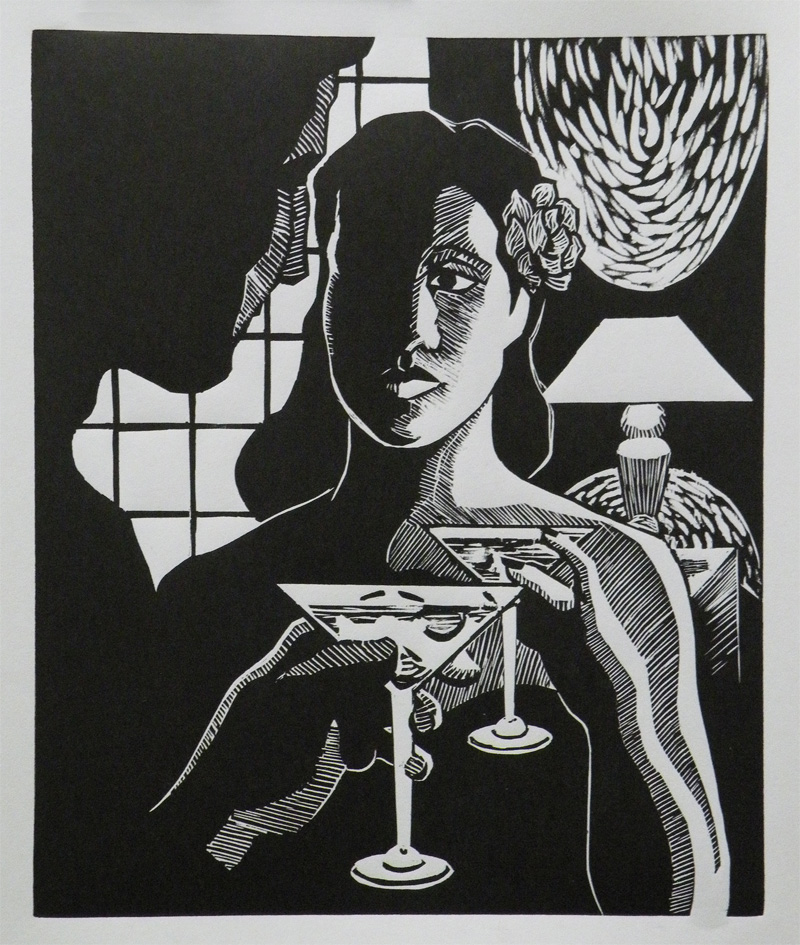
| 2016 Leslie Peterson Sapp Fatale 30x36 |
During this time of celebrating love and romance, I remember that quote a friend of mine said many years ago: “Romance is about NOT being fulfilled, it’s about longing.”
So let us distinguish between the two: Love. Romance.
Love is wholesome and sees its object as a full person, whether that person is your date, your spouse, your child, friend, parent.
Romance is about the tension that is held between you and an object of your desire. That can include love- or not.
|
| 2021 Leslie Peterson Sapp Glass Houses |
So this Valentines Day, let us raise a glass to the darker sides of our nature.
Salud!
- Published on
- Published on
My husband and I took a trip to a place I've wanted to go for a long time- Greece! We visited mainly Napflio and the Peloponnes Peninsula, the island of Hydra, up to Delphi, then Athens.
Some of you may remember that I love ancient history, and that I did a series of art based on The Odyssey. It was sensational to be in and around the place where The Iliad and The Odyssey was conceived, sung, shared, and eventually written down. In fact, we visited the ancient site of Mycenae, which was the palace complex where Agamemnon himself lived and ruled.
(If you'd like to see some of the inspiring art I saw during my trip to Greece, check out my post on my facebook page.)
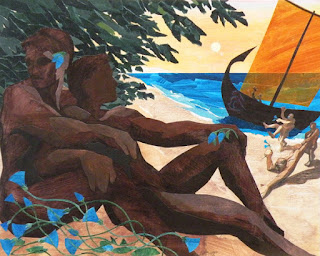
Being in Greece lent depth and richness to my understanding of The Odyssey. One experience I had was the realization that my conception of the space and atmosphere was generalized and lacking in sensitivity. It was fanciful, but vague.
The sense I have now is the astounding ruggedness of the place, how rocky mountain slopes charge down and continue deep into the sea.
I also did not have a sense of the palette. These parts of Greece are dry dry dry, and the rocks are pale and crumbly. I suppose the pale rock is part of why the sea is so green-blue.
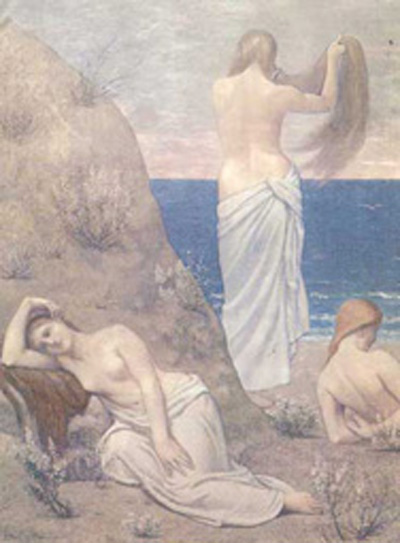
The artist whom I can think of who really got a great take on what it feels like to be a westerner, idealizing ancient Greece, is Puvis de Chavannes, a French artist active in the late 19th century.
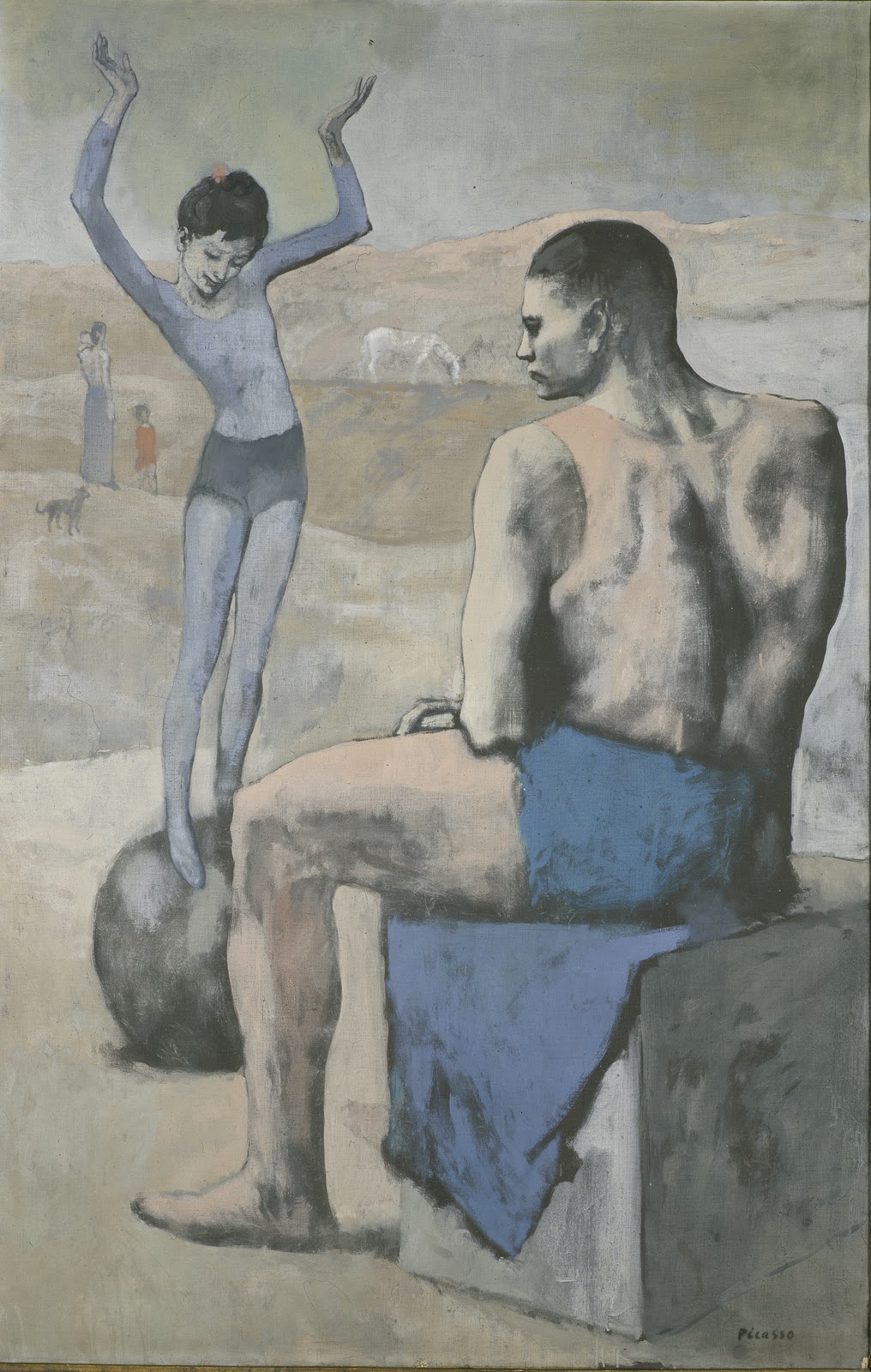
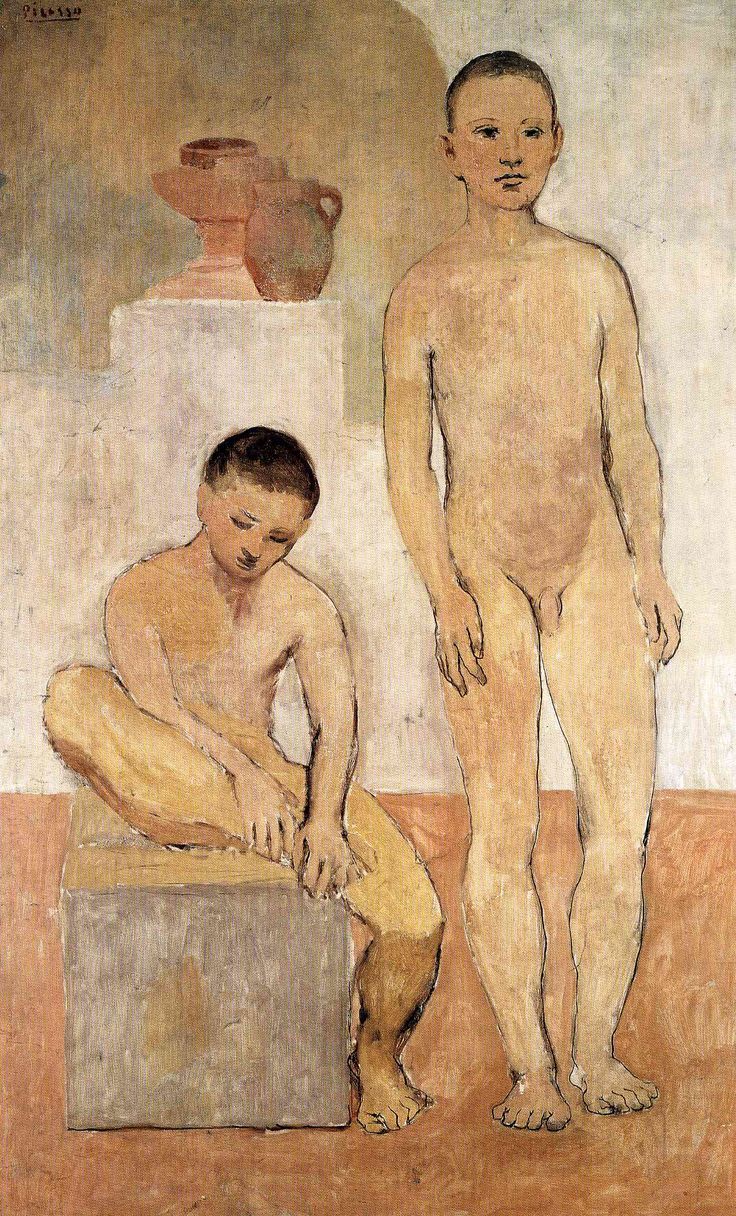
Also, Picasso captured it, perhaps with more individuality and sophistication, in many of his early works:
Although I am committed to doing more Film Noir works for the time being, I am wondering what will transpire if I decide to do more Ancient Literature work in the future. One very inspiring object I saw during my travels is a late Hellenistic funerary urn at the Archeological Museum.
 Who knows?
Some of you may remember that I love ancient history, and that I did a series of art based on The Odyssey. It was sensational to be in and around the place where The Iliad and The Odyssey was conceived, sung, shared, and eventually written down. In fact, we visited the ancient site of Mycenae, which was the palace complex where Agamemnon himself lived and ruled.

|
| The "Funerary Mask of Agamemnon" from Mycenae, housed at The Archeological Museum in Athens. |
Being in Greece lent depth and richness to my understanding of The Odyssey. One experience I had was the realization that my conception of the space and atmosphere was generalized and lacking in sensitivity. It was fanciful, but vague.
|
| "The Land of the Lotus Eaters" Leslie Peterson Sapp |

|
| Delphi, Greece |

|
| Greece, somewhere between Epidavros and Poros |

|
| "The Shepherd's Song" Puvis de Chavannes, 1891 |

|
| "Patriotism" Puvis de Chavannes, 1893 |
|
| "Young Girls by the Sea", Puvis de Chavannes, 1879 |
|
| "Acrobat on a Ball" Picasso, 1901 |
|
| "Two Adolescents", Picasso, 1906 |

|
| "Boy Leading a Horse", Picasso, 1905-6 |

- Published on
Film noir movies are modern day myths.
“Catharsis” is from the Greek word “kathairein”, meaning “to cleanse, purge.” Aristotle first used this as a metaphor to describe how watching tragic drama can inspire feelings that brings about spiritual renewal or release from tension.
In much the same way someone may like a good war movie or punk rock, yet has no desire to engage in combat or live a chaotic, drug-addled life, many of us achieve a certain catharsis by watching the sufferings of the glamorous figures in a good film noir.

In my collage paintings, I use the drama of a noir-esque scene to draw in the viewer not only by depicting figures in evocative, cryptic situations, but by how I organize and compose the image.
In the book “Somewhere in the Night”, Nicholas Christopher describes the noir cityscape as a labyrinth, which reflects the complexity of the movie plot, the inner workings of the protagonist’s mind, and symbolizes the Hero’s Journey into the depths of the soul.

The space depicted in my collage paintings is congested and complicated, sometimes difficult for the viewer to navigate. It is evocative of complicated plot twists and reversals. Lately I have been playing with mirrors, doorways and windows, which I see as apertures into other worlds and realities. The claustrophobic, complex space illustrates the sometimes turgid complexity of our minds and relationships.
The dark, chiaroscuro lighting symbolizes secrets withheld, obscured meaning. Objects and figures that are normally easily identified are shattered and broken down into their essential shapes without superfluous detail. They are transformed, turned upside-down, into something new, special, rarefied.
Eddie Muller, film noir’s preeminent expert, describes it perfectly:
"SUFFERING WITH STYLE.”
“The men and women of this sinister cinematic world are driven by greed, lust, jealousy, and revenge—which leads inexorably to existential torment, soul-crushing despair, and a few last gasping breaths in a rain-soaked gutter. But I'll be damned if these lost souls don't look sensational riding the Hades Express. If you're going straight to hell, you might as well travel with some style to burn.
“Today, the cynicism and fatalism found in classic film noir seems almost comforting compared to the ugliness and pessimism we confront in the media, on movie screens, and in the streets. We watch film noir with an endless fascination, and an undeniable aspect of our fascination is the realization that, as a culture, we will never be that stylish again.”
http://noiralley.tcm.com/noir-101

- Published on
March is Women's History month, and March 8th is International Women's Day.
As part of my blog series talking about Film Noir and how I use it as a source for my art, I have been pondering Noir through the lens of how I relate to it as a female artist.
Part of the enduring fascination we have with Noir is the inclusion of powerful female characters. The zenith of Film Noir was from the 1930’s-1950’s a time of extraordinary change for women, particularly during WWII, when they took up jobs vacated by men who were off at war. The war, plus the changing role of women in society, created nationwide anxiety, much like the anxiety evidenced in our own times.
However, with some exceptions, the classic femme fatale of those times was not a feminist figure. She does not seek to break down the patriarchal system so much as she attempts to use her sexual power to win within it. The Madonna/Whore dichotomy is well in place in most of these movies. My use of the femme fatal in my art is an expression of my struggles with attempts at finding my own voice, independent of the men around me.
Nevertheless, the femme fatale is a challenge to the system, and an early and exciting example of women in power.
In my artwork, I focus on complex human relationships with delightfully ambiguous situations. In them I give my female figures an identity of their own and an interior life. In “Backlight” there is a large, looming man in the foreground, looking back at the woman on display, perhaps a classic depiction of the dominant male and the female object. Or is it? Through this traditional lens a different picture is shown. She stands resolute and firm, her steady gaze back at him makes him appear unsteady and unsure, and perhaps like he is trying to slip away.
I will be writing more about the psychological appeal of Film Noir in upcoming posts. Look out for "A Brief Primer on Film Noir - Part Two: Drama, Intrigue and Heartbreak"
As part of my blog series talking about Film Noir and how I use it as a source for my art, I have been pondering Noir through the lens of how I relate to it as a female artist.
Part of the enduring fascination we have with Noir is the inclusion of powerful female characters. The zenith of Film Noir was from the 1930’s-1950’s a time of extraordinary change for women, particularly during WWII, when they took up jobs vacated by men who were off at war. The war, plus the changing role of women in society, created nationwide anxiety, much like the anxiety evidenced in our own times.
However, with some exceptions, the classic femme fatale of those times was not a feminist figure. She does not seek to break down the patriarchal system so much as she attempts to use her sexual power to win within it. The Madonna/Whore dichotomy is well in place in most of these movies. My use of the femme fatal in my art is an expression of my struggles with attempts at finding my own voice, independent of the men around me.
Nevertheless, the femme fatale is a challenge to the system, and an early and exciting example of women in power.
In my artwork, I focus on complex human relationships with delightfully ambiguous situations. In them I give my female figures an identity of their own and an interior life. In “Backlight” there is a large, looming man in the foreground, looking back at the woman on display, perhaps a classic depiction of the dominant male and the female object. Or is it? Through this traditional lens a different picture is shown. She stands resolute and firm, her steady gaze back at him makes him appear unsteady and unsure, and perhaps like he is trying to slip away.

|
| "Backlight" Leslie Peterson Sapp, 38"x48" Acrylic on panel. |
- Published on
As many of you know, I have been creating collage paintings based on film noir imagery. Film noir is one of the most enduring and beloved of film genres. The term "Film Noir" was coined after the fact, much the same way many art "movements" were coined by art historians after the so called "movement" was largely over. During WWII many American films were not available in France. In 1946 there was a retrospective in Paris of American Hollywood films and the Parisian critics called the style "film noir", or "black film", which may be more correctly interpreted as "dark film". But what exactly is film noir, and where did it come from?
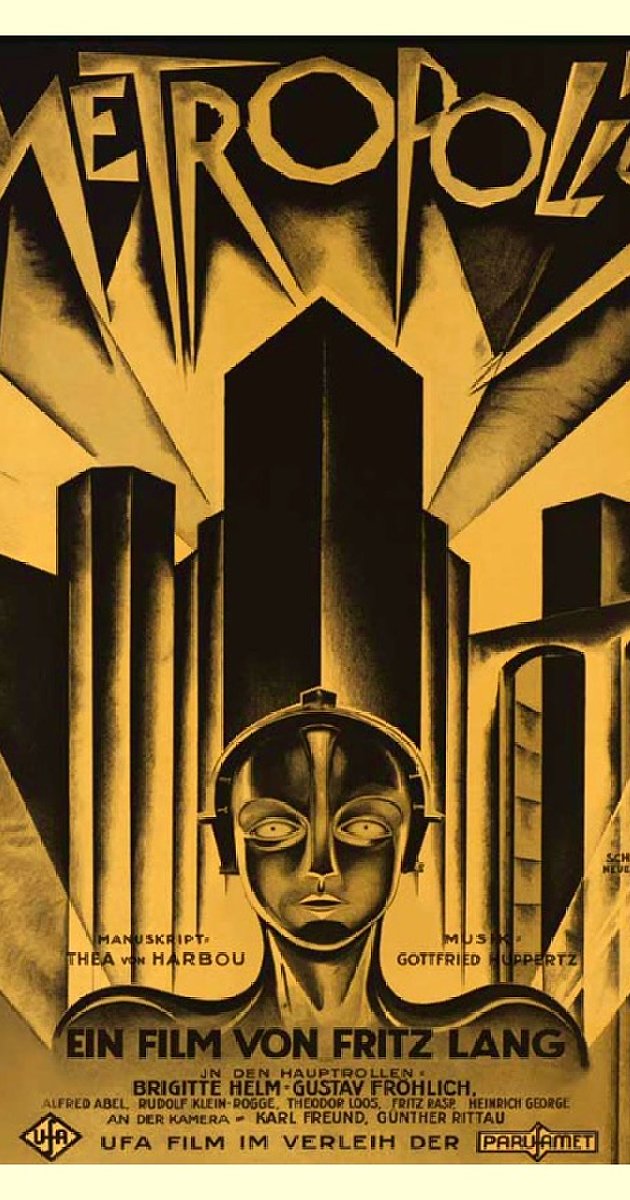
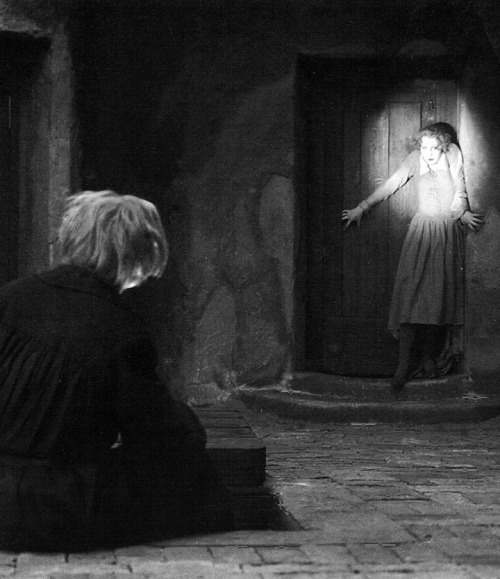
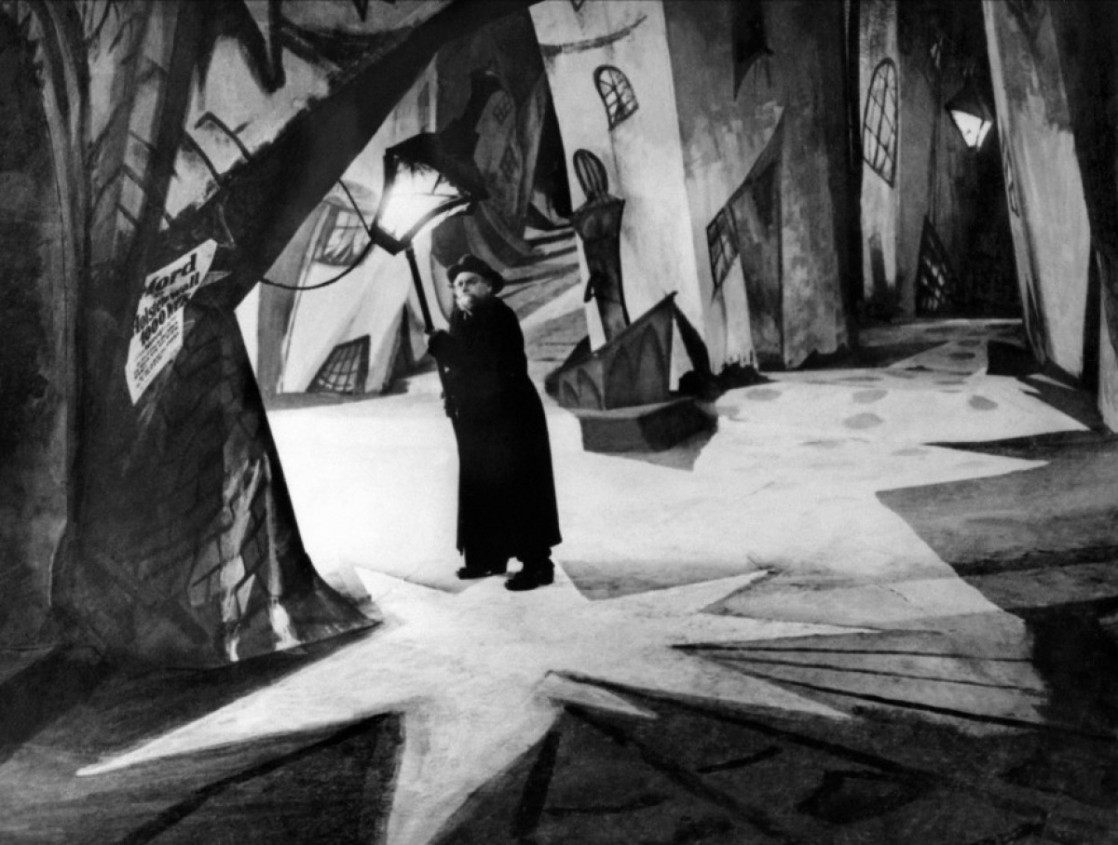
German expressionism was an art movement in Germany starting at the turn of the 20th century, and encompassed painting, theater, music, literature, and the brand new medium of film. It sought to express emotion and subjective experience by the using symbolism, exaggeration, and distortion. The style reached it’s apex in Berlin during the 1920's. A few of the most famous expressionist films are "Metropolis", "M", and "The Cabinet of Dr. Caligari" (my personal favorite!).
Then those nasty kill-joys, the Nazi’s came into power. Expressionist artists of all types were proclaimed “degenerate” and their work was confiscated, destroyed, their careers were derailed and many times their very lives were in danger. On top of that, many were also Jewish, Catholic or queer. Unsurprisingly they made efforts to flee to safer locations as soon as they could. Along with this exodus, a number of film makers wound up in Hollywood.
The Hollywood Studio System was in force at the time, which had a tiered system of movie production costs and qualities. While epic movies got a lot of funding and top star billing, crime and detective movies where considered of a lower budgetary class, sometimes even B movies. They were pot-boilers, and often cranked out quickly.
A number of the new immigrant film makers were assigned to these films. Fritz Lang, Robert Siodmak, Billy Wilder, and Otto Preminger are the most famous. German expressionist film was film brought to a high art and were far more sophisticated and considered than anything that was typically produced in the United States at that time. These directors used their techniques and sensibilities developed in Germany in the new crime dramas. This was not fully appreciated at the time; crime and detective movies ran under the radar and attracted no critical praise. But the superior film making techniques made the movies more popular and is what has made so many of these films gain popularity over the decades.
The techniques used included deep focus cinematography, extreme camera angles, dramatic lighting shone from raked angles, and chiaroscuro (which is an painterly technique developed during the Renaissance where use of deep variations of light and dark is used to enhance mood and create dramatic effect).
The ultimate example of chiaroscuro; Caravaggio!
The fact that the movies were often low budget productions actually helped make the movies better. The famously dark lighting covered up cheap productions. Dramatic lighting made up for lack of funding for expensive special effects and uninteresting sets. There was more of a dependence on exciting scripts and clever dialogue. The rushed timetables forced productions to be fast, tight, and efficient. And because they weren’t considered important, they were often under the radar of producers and the Motion Picture Production Code!
The visual style of film noir is my primary concern when I create an artwork. I consider the masters of noir my teachers as well as my inspiration. Even when I am dealing with an image that hasn’t come directly from a film noir, I still infuse it with the elements of film noir. For example, the image below is based on a Torchy Blane movie "Chinatown" from 1939. While Torchy Blane movies may have involved detectives, reporters and solving crime, they are light comedy adventure films, and most definitely not "dark"!
Aside from the formal artistic elements of noir, I am also inspired by the stories and style. I will write about that in my next blog post, "A Brief Primer on Film Noir - Part Two: Oh, the Drama!"
German expressionism was an art movement in Germany starting at the turn of the 20th century, and encompassed painting, theater, music, literature, and the brand new medium of film. It sought to express emotion and subjective experience by the using symbolism, exaggeration, and distortion. The style reached it’s apex in Berlin during the 1920's. A few of the most famous expressionist films are "Metropolis", "M", and "The Cabinet of Dr. Caligari" (my personal favorite!).
|
| "Metropolis" poster |
|
| "Metropolis" by Fritz Lang |

|
| "M' by Fritz Lang |

|
| "M" by Fritz Lang |
|
| "The Cabinet of Dr, Caligari" by Robert Wiene |

|
| "The Cabinet of Dr, Caligari" by Robert Wiene |
Then those nasty kill-joys, the Nazi’s came into power. Expressionist artists of all types were proclaimed “degenerate” and their work was confiscated, destroyed, their careers were derailed and many times their very lives were in danger. On top of that, many were also Jewish, Catholic or queer. Unsurprisingly they made efforts to flee to safer locations as soon as they could. Along with this exodus, a number of film makers wound up in Hollywood.
The Hollywood Studio System was in force at the time, which had a tiered system of movie production costs and qualities. While epic movies got a lot of funding and top star billing, crime and detective movies where considered of a lower budgetary class, sometimes even B movies. They were pot-boilers, and often cranked out quickly.
A number of the new immigrant film makers were assigned to these films. Fritz Lang, Robert Siodmak, Billy Wilder, and Otto Preminger are the most famous. German expressionist film was film brought to a high art and were far more sophisticated and considered than anything that was typically produced in the United States at that time. These directors used their techniques and sensibilities developed in Germany in the new crime dramas. This was not fully appreciated at the time; crime and detective movies ran under the radar and attracted no critical praise. But the superior film making techniques made the movies more popular and is what has made so many of these films gain popularity over the decades.
The techniques used included deep focus cinematography, extreme camera angles, dramatic lighting shone from raked angles, and chiaroscuro (which is an painterly technique developed during the Renaissance where use of deep variations of light and dark is used to enhance mood and create dramatic effect).
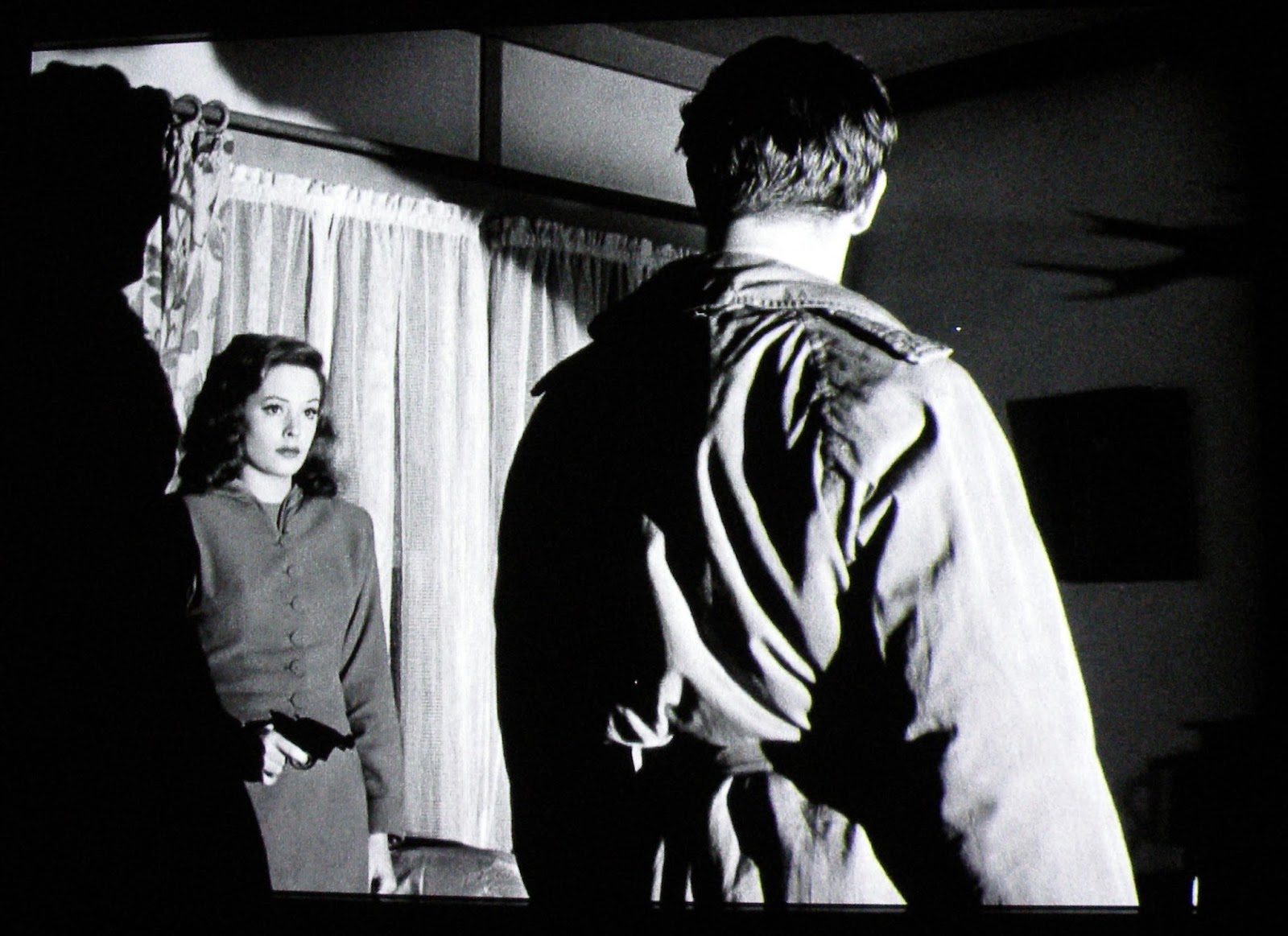
|
| "Out of the Past" by Jacques Tourneur |

|
| "Out of the Past" by Jacques Tourneur |

|
| "The Racket" by John Cromwell and Mel Ferrer |
The ultimate example of chiaroscuro; Caravaggio!

|
| Caravaggio "Judith Decapitating Holofernes" 1599 |
The fact that the movies were often low budget productions actually helped make the movies better. The famously dark lighting covered up cheap productions. Dramatic lighting made up for lack of funding for expensive special effects and uninteresting sets. There was more of a dependence on exciting scripts and clever dialogue. The rushed timetables forced productions to be fast, tight, and efficient. And because they weren’t considered important, they were often under the radar of producers and the Motion Picture Production Code!
The visual style of film noir is my primary concern when I create an artwork. I consider the masters of noir my teachers as well as my inspiration. Even when I am dealing with an image that hasn’t come directly from a film noir, I still infuse it with the elements of film noir. For example, the image below is based on a Torchy Blane movie "Chinatown" from 1939. While Torchy Blane movies may have involved detectives, reporters and solving crime, they are light comedy adventure films, and most definitely not "dark"!
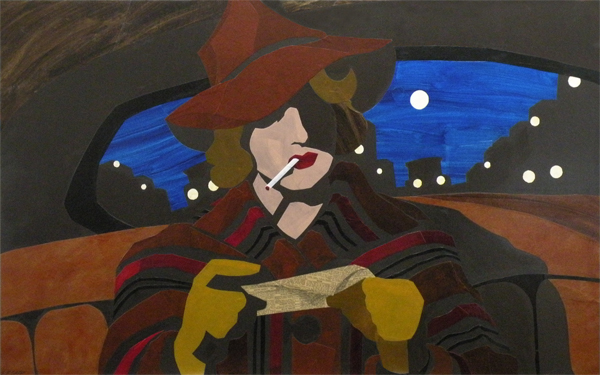
|
| Leslie Peterson Sapp, "Objective II" 30"x48" |
Aside from the formal artistic elements of noir, I am also inspired by the stories and style. I will write about that in my next blog post, "A Brief Primer on Film Noir - Part Two: Oh, the Drama!"