LESLIE PETERSON SAPP
  • Home
  • Portfolio
    • Artist Books 2023-2025
    • Archeology Art 2022-2023
    • Film Noir 2015-2022
    • Myth and Story 2016-2017
    • Vintage Snapshot 2008-2014
  • About
  • Contact
    • Contact
    • subscribe
  • Blog

The Cup of Nestor

4/9/2023

0 Comments

 
A few years ago, I read an article in Archeology Magazine, called When the Ancient Greeks Began to Write; Newly Discovered Inscriptions Help Explain How Literacy Spread.
It has stuck in my mind ever since, and I have started to create new art piece for my Archeology Art series, inspired by what I learned.

In this new piece, I am combining images from two famous archeological finds, The Cup of Nestor, and an image from The Tomb of the Diver.

Picture
©lesliepetersonsapp The Cup of Nestor 12x12 Mixed Media

The Cup of Nestor

The Cup of Nestor was discovered in 1954 at what had been an ancient Greek colony in Italy. The cup was probably formed and fired in 750 BC. Some years later, someone scratched letters on it. It is one of the earliest extant examples of the use of an alphabet.
Picture
The Cup of Nestor

What is an alphabet?

Picture
Totally cool pic of Cuneiform

Writing systems had been around for a long time before that. Around the Mediterranean, it started with pictograms, then moved onto hieroglyphs, then to actual scripts, such as Linear A, Linear B and Cuneiform. But the symbols used in these systems signified entire concepts, words, and then syllables.
The thing that makes an alphabet an alphabet is that it has symbols that indicate consonants and vowels, in other words, smaller sound units.  These symbols, or letters, can be used to indicate the sound of a word, not just a concept of a word.

This meant that it could be used to write down poetry, names, anything you like.

Before this time, writing was a skill used for very specific purposes, such as rituals or official diplomatic letters. But most of it was used for something that grew in importance as societies became more and more complex: money.

Writing systems were used mostly for accounting and keeping track of trade. How many bushels of wheat, how many amphorae of oil, where did it go and how much money did it yield? Only very particular professionals used writing, and they used it for some very dry, but essential transactions. No one else used writing. Why would they? It was boring.
Picture
Numerical tablet, 3500-3350 BC

Along came the Greek alphabet.


Exactly how, where and when it was invented is pretty foggy. But what is clear is that it was developed from a writing system used by the Phoenicians, a sea-faring cluster of peoples living along the coast of today’s Lebanon and Syria. Someone took this writing system and developed it so that the sounds of words could be captured.

It took off like a house on fire. Elite men across the Greek world with its far-reaching colonies and cities started to write. Writing became cool.

It became all the rage.


So, the Cup of Nestor with its scratched inscription was a very early example of this. But what also makes even more it fascinating is that it isn’t just any old inscription, it is a joke.

One of the world’s first recorded jokes.


It’s an inside joke about old King Nestor in the Iliad. It reads: “I am the cup of Nestor, a joy to drink from. Whoever drinks this cup empty, straightaway the desire of beautiful-crowned Aphrodite will seize.”

Picture
The actual inscription on The Cup of Nestor
In context, I can almost imagine the scene in which this occurred. This cup is a drinking cup. It would have been used at a symposium.


Today, “symposium” tends to indicate a gathering where elevated ideas are shared, perhaps featuring an enlightening debate or lecture series.


Picture
Boring Symposium
Picture
Fun Greek Symposium


A symposium in classical  Greece did have erudite discussions, music and poetry, but it was also a ribald party where everyone got soused.
This brings me to the image I chose to lay behind my rendition of the cup.

The Tomb of the Diver

The Tomb of the Diver is a coffin-sized tomb in what was a Greek colony in southern Italy, probably created around 470 BCE. It’s made up of five limestone slabs, covered with plaster and painted with frescos.
Picture
Along the walls of this small tomb the scene of a symposium is depicted. Beautiful men are laid out on their fancy couches, drinking, talking, playing games- and flirting.


The inscription on the Cup of Nestor is not specific about who the object of desire would be, once the cup was drained.

It may even imply the desire it induced might be indiscriminate.

Picture
But the tradition of same-sex love affairs was strong during that time, as is demonstrated by this beautiful painting. Same-sex love in ancient Greece is a huge subject, fascinating in itself, and very very different from how we conceive of and enact same-sex relationships today. But if you were to look up “symposium” in an article or entry, often this very image is associated with it.

My artwork inspired by The Cup of Nestor blends three elements: the alphabet, a symposium, and being seized by the desire of beautiful-crowned Aphrodite.
I don’t want to completely understand or graphically illustrate this moment in time. I want to express the mystery of it. I do this by borrowing images of what remains and combining them together into an eurhythmic, evocative whole.
0 Comments

The Seed Keeper

3/18/2023

0 Comments


Libraries aren't just for books!

I’m very excited to say that I have been invited to participate in the Lake Oswego Reads program.

The Lake Oswego Public Library organizes this annual, immersive program that encourages all members of the community to read the same book, discuss its message, and celebrate an atmosphere of learning amongst all age groups. Additionally, a small group of artists are invited to read the chosen book and create a piece inspired by it.

This year the book is The Seed Keeper by Diane Wilson.

Picture
In addition to being an author, Wilson is the former Executive Director for Dream of Wild Health, an Indigenous non-profit farm, and the Native American Food Sovereignty Alliance, a national coalition of tribes and organizations working to create sovereign food systems for Native people. Wilson is a Mdewakanton descendant, enrolled on the Rosebud Reservation.

The Seed Keeper

This dense, multi-layered story is about Rosalee Ironwing Meister, a Native American Dakota woman, and her quest to become whole. Interwoven into the story is the recounting of her ancestors’ struggle to survive the “Indian Wars,” relocations, boarding schools, and the collective trauma caused by these events. Throughout the book, the theme of seeds, traditions being handed down, and the evolution of farming techniques binds it all together.

My inspiration and interpretation

In this piece, I integrate several objects and moments in time into a single image.
Picture
©lesliepetersonsapp The Seed Keeper
Set in a pristine snowscape, a grove of trees is in the distance. A solitary set of footsteps lead into the empty expanse. A pictograph of a house, almost like a child’s drawing, is simultaneously an envelope, and hovers like a specter over the scene. In contrast, warm and earthy tones depict a cob of corn laying on the earth, seeds huddling in the soil, and a cornstalk reaching toward the sun.
The books protagonist, Rosalie Ironwing is a loner. She has had a tumultuous and insecure young life.
She meets and marries a white farmer, John Meister when she is very young. John is a deeply flawed human being, who nevertheless is able provide Rosalee with a place of rest, security, and unconditional regard, even love.

The scene in the book that created the most vivid visual image for me takes place early in their marriage. On a clear, cold day, she attempts to walk through deep snow to a grove of trees across a large field, but cannot manage it. John silently provides snow shoes for her. With dogged persistence, she is eventually able to reach the grove of trees.

About this same moment in the narrative, in the pantry of John’s old, crumbling white farmhouse, Rosalie finds an envelope full of seeds that John’s mother had stashed many years before. In time, through trial and error, she learns how to grow a garden.
Picture
When John dies, she goes on a quest to make peace with her past, and in so doing regains contact with her family and her heritage. 
Picture
Her aunt Darlene presents Rosalie and her son with seeds and a tiny, wizened corncob, kept in a small pouch.
I see the envelope, the pouches, and even the old white farmhouse as being safe places for seeds and souls to rest and incubate. From that place of rest, growth is possible.


Creating an encaustic-like effect

The technique I used to make this piece is part of a new method of artmaking for me. I wished to create an encaustic-like effect by using layers of different types of acrylic media.

Encaustic is painting with hot wax. It is an ancient painting medium that has seen a rebirth since the 1990's. Because it is wax, it has a beautiful, foggy opacity. The wax can be applied and fused in layers, so there are often multiple images peeking through, creating depth.

First, I drew and painted the main image. Then I covered it with Golden Clear Leveling Gel, then Golden Heavy Matte Gel. Then I drew the house/envelope. I added more color and detail to it. Then, using a scumbling technique, I intensified the white snow in the center of the image by adding titanium white and pearlescent silver. Many of the effects and details cannot be properly seen in a photograph, because there is depth iridescence and a wee bit of sparkle.


The Lake Oswego Reads Art Exhibition will hang at The Dee Denton Gallery in the Lakewood Center for the Arts, then move to multiple venues throughout the state of Oregon.
0 Comments

A Beautiful Mind

1/10/2023

1 Comment

 
Picture
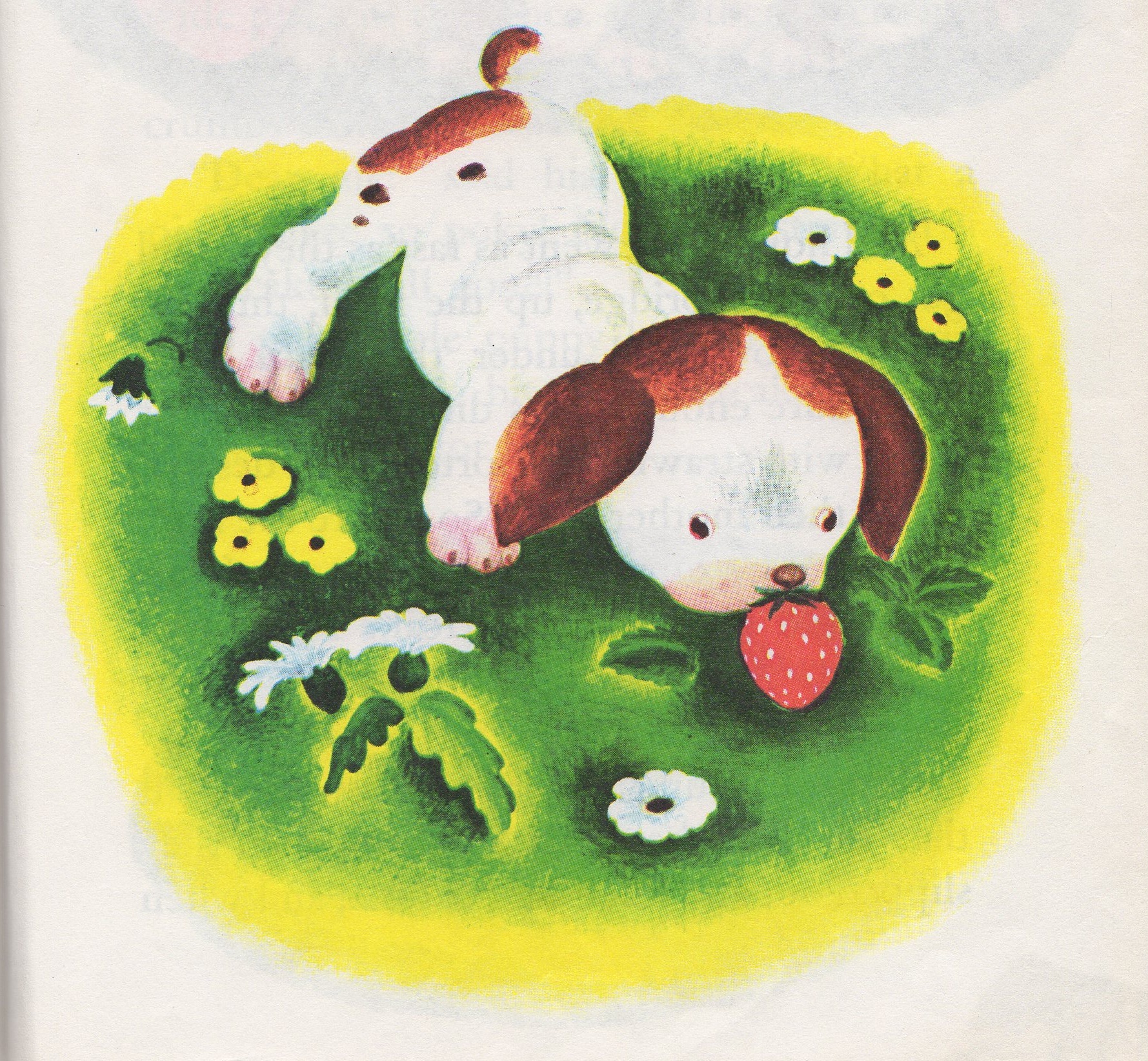
A while back, I wrote a blog post called “The Poky Little Puppy” and an accompanying email called “In Defense of the Slow.” I talked about how, at 40 years of age, I was diagnosed with Attention Deficit Disorder, Inattentive Type. This realization has helped me to better understand some of the challenges I have had in navigating this life.
But ADHD is also closely associated with having a creative mind. Artistic mind, attention deficit disorder, who knows where one ends and the other begins?

Distracted Mind, Artistic Mind

Picture

Just like Little Red Riding Hood, my mind is not good at staying on the path. It wanders off and picks flowers, attracted by the next, and the next, and the next more captivating bloom.

I’ve got a terrible memory. I often forget essential aspects of whatever task I am performing. (Recently I set off to buy new glasses, leaving my prescription at home.)

My mind is not organized. Information comes in the form of so many scraps of paper, fluttering about in the wind. Projects or professions that involve any complexity seems like an insurmountable undertaking.
But, I recently learned something sort of fun about my mind, and how it likes to organize itself.

I was trying to develop some sort of regular, consistent, doable habit in regards to posting on social media about my art. “Everyone” was buzzing about social media.


You know, “Everyone," don’t you? “Everyone” says:
  • You should post everyday so you can be in good with the “algorithm.”
  • Reels are the next big thing. Everyone is doing reels.
  • Stories are the thing. You’ve got to do stories.
  • First you post, then you share it all over the other “platforms.”
  • Every "platform" has specific demands, like on Twitter you can have only four pictures, but Instagram you can have ten. Stories videos are only 15 seconds long, but Reels are 90.

And so on, and so on. All that resulted from this was a panicky sense of dread.

Enter, the Mind Map

Picture

Here is all is. I spent hours on this silly thing.

I tried to impress my friends by sharing it with them, but they didn’t even want to LOOK at it, and who could blame them? It seems overly elaborate and faintly ridiculous now, but the one most important thing is also true: now I know.

Now I know. Social media is no longer confusing to me. I may need a reminder of the specifics, but the tiny scraps of paper have settled down into an orderly pattern. Now I understand.


As I just wrote about in my post “Evolve or Die,” I revealed that I am starting on a new body of work, inspired by archeology and deep history. It’s really exciting, and really scary. For the first time in many years, I genuinely have no idea what I am doing. It will be an adventure into the unknown.

I am an avid consumer of archeology media and entertainment. Over the years, I have absently absorbed scraps of information. Over time, these bits of information started to formulate themselves into a loose, fluttery vision of the world.

I became filled with the desire to understand these little scraps in context, in an order, like maybe a mind map… or maybe… a time-line.


Enter, the Time-line

Picture
Fueled with this new obsession, I knew that I was not going to be able to commence on my new journey of art-making without tackling this. I took a large roll of paper, rolled it out on my wall and tacked in down.

I decided on a very general form: seven areas of the planet, drawn with seven horizontal lines. The time demarcations will be the vertical axis. But, I am still not sure what time periods I am going to depict, and where they will land. So, I started to write bits of information I find intriguing on bits of rice paper, and started to tape them up at various places. Everything at this point is in flux and movable.


I feel like a mad scientist.

Enter, the Mad Scientist

I have recently learned from The Google that there is a thing called “The Crazy Wall.” It’s a meme, stemming from the media’s dramatic use of an “evidence board” real detectives use to solve crimes. It was used to most dramatic effect in the 2001 movie *“A Beautiful Mind.”
Picture
Scene from A Beautiful Mind, 2001
For the first time in a long while, I am creating something that I have no real intention of putting on display or trying to sell. Somehow, I just know I need to do this. I need to capture and contain what I know, but cannot yet use. Something that simply comes out of my beautiful mind.

My beautiful, inefficient, scattered, forgetful, creative, artistic mind.
A video of me about to dive into the time-line.
*Please note that A Beautiful Mind is a movie about schizophrenia, not about a mild case of neurodivergence, like I have. I am using the evidence board in the movie as a symbol for the way I process information, and is not intended to make light of schizophrenia or mental illness and its effects.
1 Comment

Evolve or Die!

1/9/2023

0 Comments

 
"Evolve or die" is a common quote. I’m not sure I would die if I didn’t evolve, but stagnation is something I cannot exactly live with either.

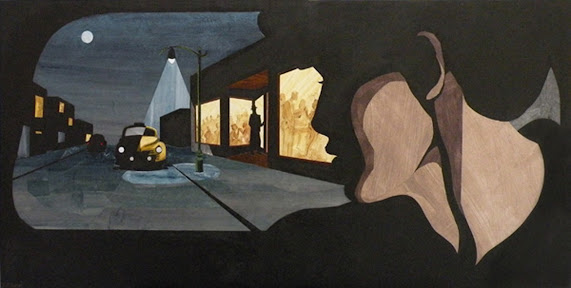
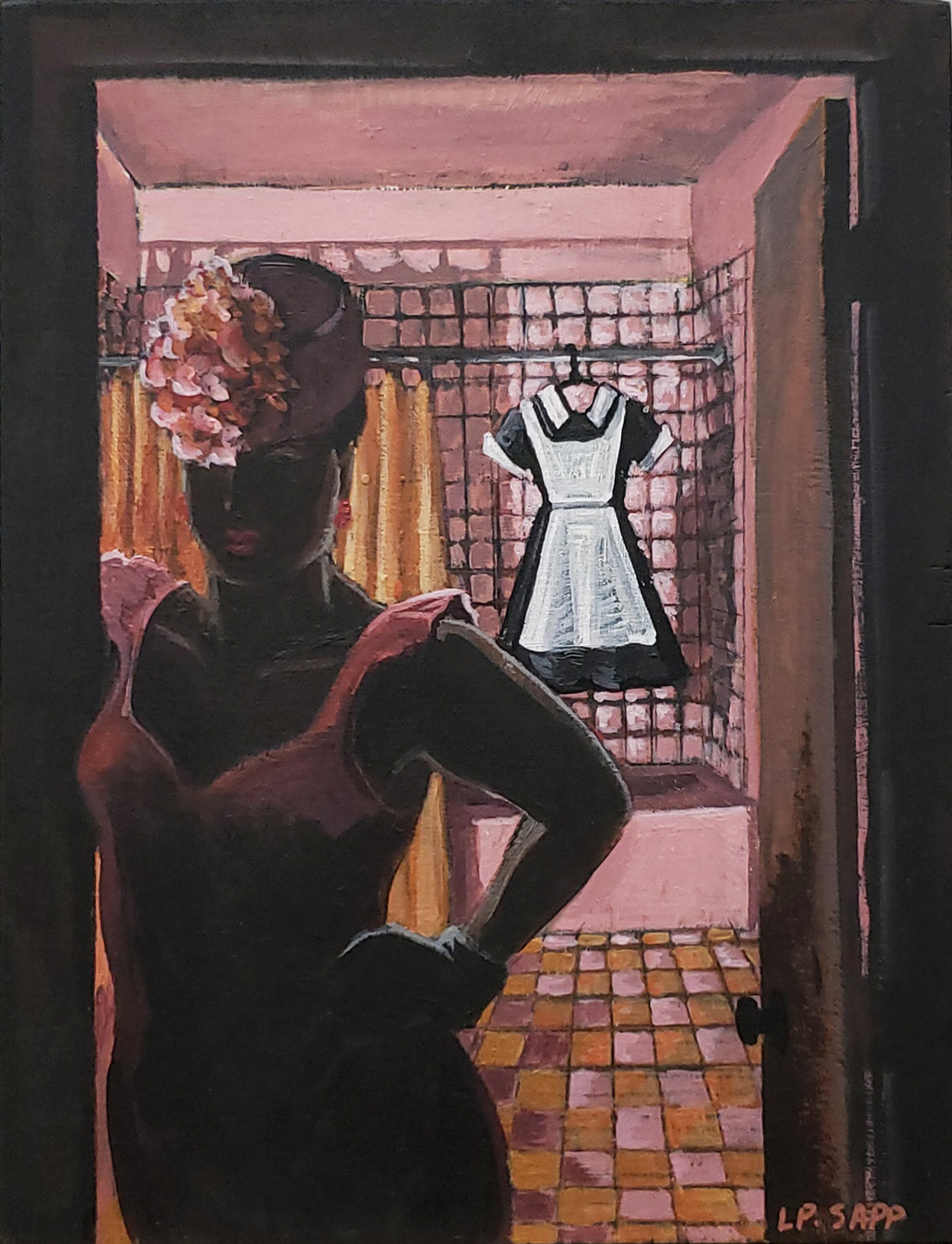
Since the beginning of my art career, I have had two main bodies of work, which I call “Vintage Snapshots” and “Film Noir.” Now I am commencing on a whole new body of work! I don’t really have a catchy name for it yet, but it is inspired by my fascination with archeology and history.


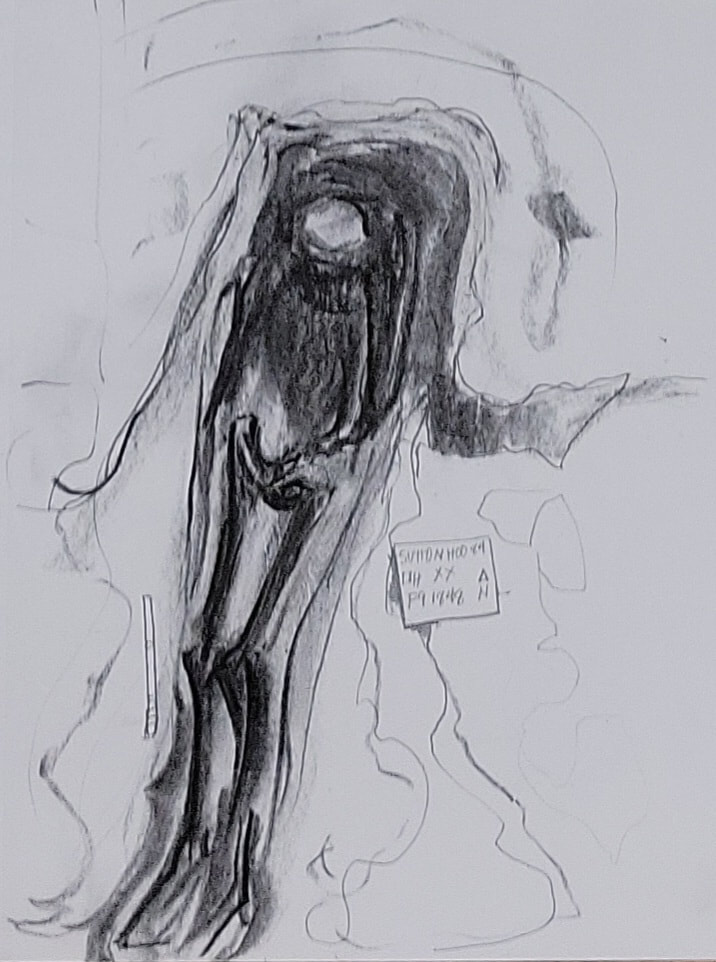
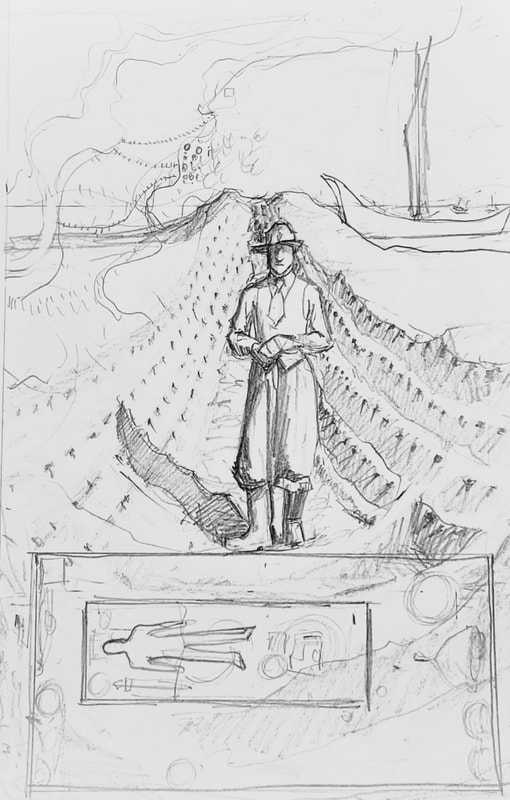
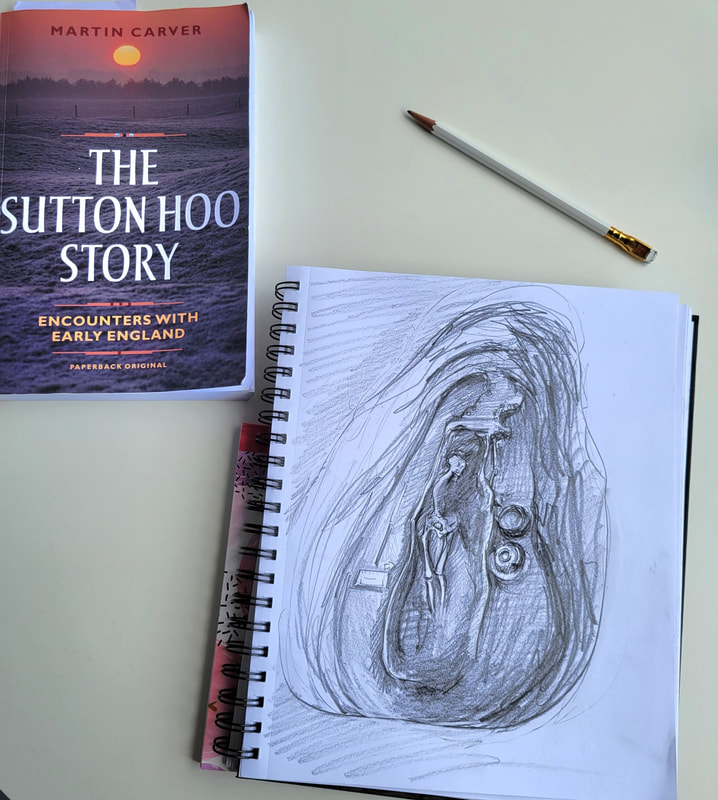
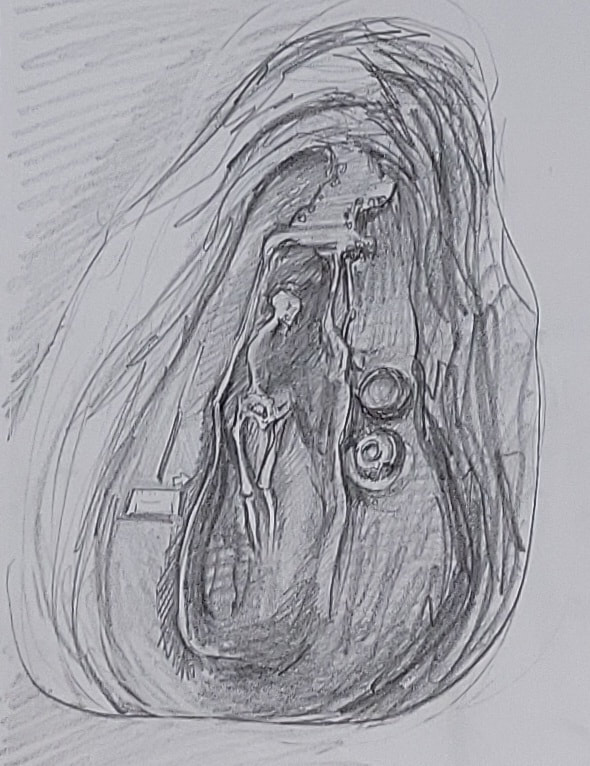
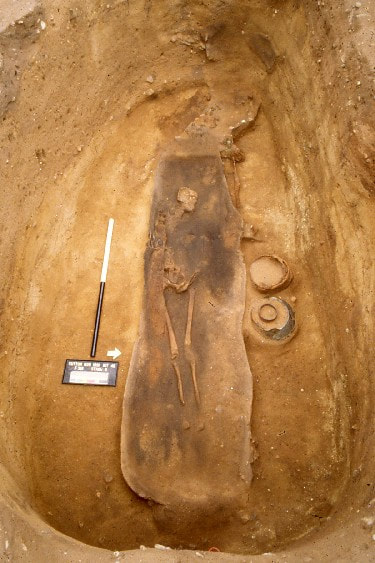
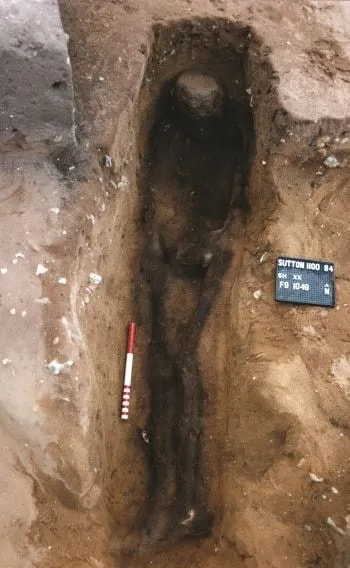
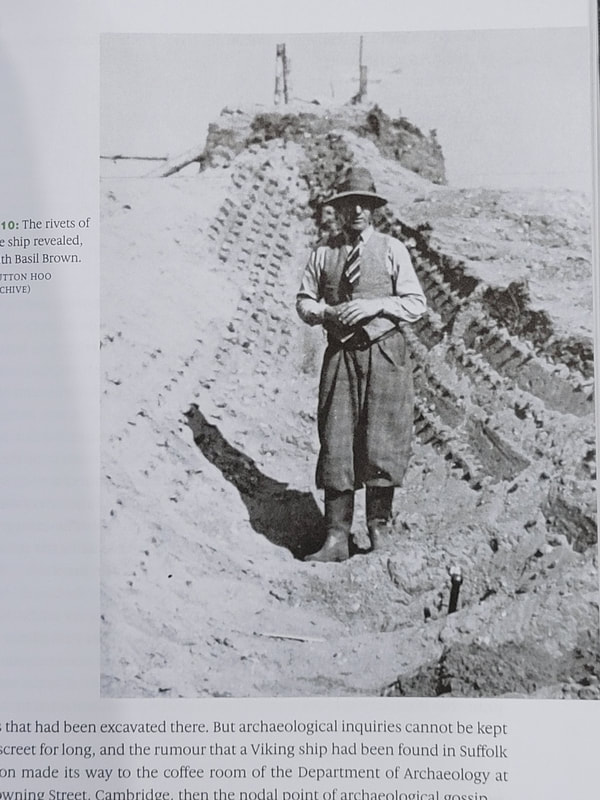
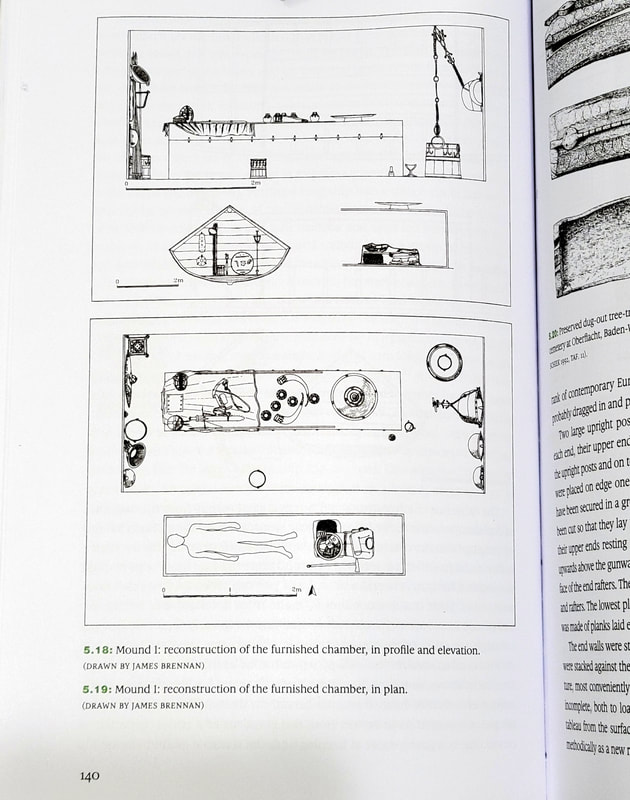
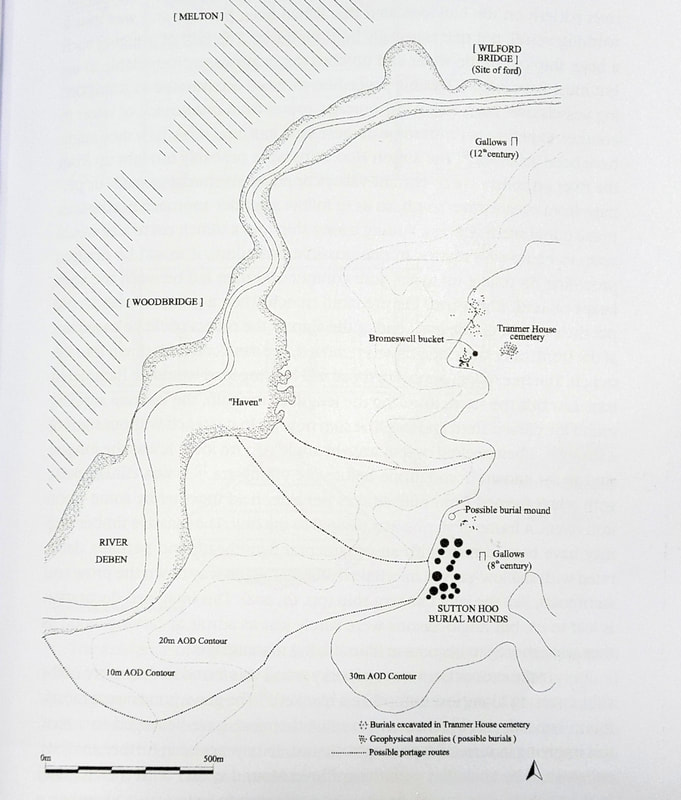
I made a blog entry almost a year ago entitled “I’m in Love with Archeology.” In it I displayed some sketches, inspired by a book about Sutton Hoo, a famous Anglo-Saxon burial site, depicted in the 2021 movie The Dig. Since that seminal series of sketches, my desire to follow that path has grown and grown, and now I cannot deny it any longer.

My aim is to create art not just about the subject itself, but also about how my mind works, what I find interesting, and why.

Picture
Sutton Hoo sketch 2022
Picture
Acrylic medium test panel 2023
This will involve using not just drawing and painting, but text, layering, and perhaps some maps or schematic diagrams as well.

This is a test piece where I am experimenting with different types of acrylic mediums, layered with text and drawing.
Notice I make a lot of pencil notes on it, to keep track of what combinations I have used.

For the first time in many years, I genuinely have no idea what I am doing. It will be an adventure into the unknown.
0 Comments

Travelogue: Artistic inspiration in Santa Fe

11/17/2022

1 Comment

 
I have just returned from spending a week in Santa Fe, New Mexico with my best artist buddy, Bridget Benton Carwyn.

Traveling is always an inspiration, but it is especially so when it is with another artist in an "art town" like Santa Fe.

Picture
Me an Bri at Bandelier
Picture
It seems fitting that this being Native American Heritage Month, I found myself immersed in an area of the country that is saturated with, if not authentically Southwest Native American culture, then at least the culturally appropriated version of it.
From the adobe-style buildings, to the textiles, to the silver and turquoise jewelry, regional Native American peoples have created the basis of the “Southwest” style.

Museums Abound!
Santa Fe is chock full of museums. Now, I love museums. Wherever I go, I seek out museums, and can spend an almost distressingly long amount of time in them, reading every interpretive panel and label as I go.
Museums are different than when I was young (heck, everything is different than when I was young!) All educational materials were oriented from a white, male, European-oriented point of view. This has really shifted.

The Palace of the Governors
Case in point: The Palace of the Governors. (Don’t get too excited, it’s not much of a palace!) It was built in 1610 and served as a local seat of government for the Spanish empire, then for the United States territories. In 1901, it became a history museum.
Picture
Now, back in 2004, Jim and I visited Santa Fe and went to the Palace of the Governors. I remember seeing exhibits in the long, rambling adobe building situated on the main public square.
Picture
Since then, it has gone through a complete transformation. The block behind the Palace was razed and the New Mexico History Museum was built. The Palace is still a piece of the museum, but the bulk of the exhibits are in the new building.
There, I learned in great detail about the clash of three groups; Native Americans, the Spanish, and later the “Americans” (I wish to goodness I could call us “United Statesians”- far more accurate!)
Formerly, any atrocities and injustices caused by European expansion was glossed over and minimized. This time, it was all laid out clearly and objectively. Not only that, the agency and formidability of the various Native tribes was also clear to see.
Picture

Museum of Indian Arts and Culture
Picture
The Museum of Indian Arts and Culture (MIAC) is more than a collection of artifacts displayed with interpretation.  It is a museum that specifically communicates through the lens of Native Americans of the area.

Before the museum opened in 1987, an Indian Advisory Panel was formed to provide technical and cultural advice and approval of the objects displayed. The factual details and the philosophical interpretations are guided by these representatives. The outcome is that I, a European-facing outsider, can get a glimpse into the world of the Southwest Indian culture in a way that is immersive and multi-faceted.

Picture
Interpretive panel, Museum of Indian Arts and Culture
Picture
Father Sky, Mother Earth by Tony Abeyta 1995
Contemporary artwork is included along side of the historical objects, giving an even larger sense of it being a living experience, not a dry report.
The main permanent exhibit is called “Here, Now & Always” The title is appropriate, because it used to be that Native Americans were described in past tense, like they didn’t exist anymore.

Museum of Contemporary Native Arts
The Museum of Contemporary Native Arts (MoCNA), is the museum associated with the Institute of American Indian Arts (IAIA). This art school is meant for students to explore their cultural traditions and bring it into contemporary expression. 

A quote from their website: “IAIA is a place to embrace the past, enrich the present, and create the future, moving ahead to paths yet unexplored and undiscovered.”

Picture
Art of Indigenous Fashion, MoCNA
What have I learned?
I understand that what I am about to say is going to be a cliché, so please bear with me.
European culture is very compartmentalized. Emphasis on the individual, especially here in the US, is unusually important. On top of that, artists and art are seen as being apart from the rest of society, as being “special” and isolated.
Picture
Interpretive panel, Museum of Indian Arts and Culture
As I was immersed in and experienced what these museums were offering, two main themes emerged.

One, that for these Native American creators, communal identity is a part of what goes into every form of expression.

Two, that the things created and displayed were often regarded not as “objects,” but as living things with an energy of their own. 

One terrific exhibition at The Museum of Indian Arts and Culture is Grounded in Clay: The Spirit of Pueblo Pottery. The collection of pots and sculptures displayed are from diverse places and times, and were curated by a group of Native American potters, historians, and educators.
Picture
Grounded in Clay: The Spirit of Pueblo Pottery, MIAC

From their website: “Unlike exhibitions guided by Eurocentric timelines and Western concepts of art and history, Grounded in Clay’s focus on personal and community meaning emerges as a conversation expressed in prose, poetry, and the visual language of pottery.”
In one video, a potter said “Each pot has its own journey. Each pot has its memories.” (See video below)
It seems to me that the act of creation for many Native American artists is not merely an attempt at personal expression, but is an essential tool. A tool not only for cultural survival, but for their communities to thrive, and communicate who they are to the outside world.

Yes, but what about Moi?

I am beginning to realize my art is very ego driven. I don’t mean “ego” as in over confident or narcissistic. I mean I became attached to the identity of "artist" when I was a tiny child, because the people around me told me I was “talented.” It was a way for me to feel special and unique. Nothing wrong with that. Except that this desire to be seen as talented and “good” at art drives my decisions to this day. It separates me from my art. It separates me from myself.


What if I didn’t regard the art I create as “objects?”

What if I regarded each piece I made as a living thing?

What if I saw it as essential?
Picture
©lesliepetersonsapp Drawing, The Hanged Man

1 Comment

Classic Movie Review Interview

11/9/2022

0 Comments

 
I am so happy to say that I have been interviewed by John Cornelison at Classic Movie Review. He read my “Why Noir?” article and realized his listenership would probably like to know more about how film noir inspires my art.

The interview comes as a podcast and a video, both of which are embedded below.


Additionally, John sent me this fabulous T-shirt promoting his work. The image is based on a shot of Jane Greer, playing the notorious Kathy in Out of the Past.
Picture
John is an author, movie enthusiast, archeologist and bonsai tree specialist who has produced Classic Movie Review podcast since 2014.

In our interview we talk art, movies, and even a bit about archeology (which, you may know, is also a great inspiration for me!)

Among other things, he asks me what my favorite movie is, and who is the best femme - and homme - fatales.


Here is an excerpt from the interview, where he asks me more about that perennial archetype in film noir, the femme fatale.

John: "Fatales have often been villainized for the methods used to attain their goal. I believe this is the only tool or agency that women have in these cases, in these films. And it's not more sinister than a man beating up or shooting another man. Do you have any thoughts on how femme fatales are portrayed?"

Leslie: "I would agree with you. Oftentimes they are presented as being more evil than the man. But I think that has to do with who's writing the films and who's reviewing the films and talking about the films rather than the actual story.

"There's a great quote that's attributed to Margaret Atwood that says 'Men are afraid that women will laugh at them. Women are afraid that men will kill them.'

"I think that that that's relevant in this case because sometimes the men that are reviewing or making the films really think being laughed at or being made a fool of by women is worse than being violent."

0 Comments

Travelogue: The Artist Goes to Portugal and Spain

10/10/2022

0 Comments

 
For those who love traveling, it can be a tremendously invigorating and inspiring experience.

Why? Because it takes you out of your normal life and, in a certain way, changes who you are. It sort of rearranges your alchemic make up. When you come back, at least for a while, everything looks different.

My husband and I went on a very long trip through parts of Portugal and Spain. People traveling together want different experiences, they seek different things out, and have unique impressions of what they see. So, I and my husband can see the same thing, but experience it differently.

Likewise, aspects of our personalities can experience things differently, as if there were multiple people inside of us who have their own desires and reactions.


Picture
How does this work? Lisbon, Portugal
So, when my friend asks me, “what was your favorite part of the trip?” I have a difficult time answering. Which part of me are you asking?

What aspects of myself went on this trip with me?

The Artist, of course.
The Dance Enthusiast
The History Geek
The Antiquarian/Archeology Nerd
(Also, The Spoiled Princess- who can’t sleep because she doesn’t have her special pillow with her.)

I am a bit overwhelmed by all the amazing things I saw and experienced on this trip. So, rather than being able to write about it in a single entry, I need to write about it in parts, and let the entries come out when and how they may.

This entry is about The Artist in me.

I saw a lot of art on my trip, both in museums and in the historic places we visited.


Lisbon
Picture

The Berardo Collection Museum in Lisbon has a well curated and comprehensive collection of modern art, which is laid out in a way that takes the visitor through a tutorial of the era. It's very enjoyable and impressive.
I also got introduced to an artist I had never heard of before, Renato Guttuso, which was wonderful.

Madrid
Madrid is one of the major cities of the world, with two of the truly great historic art museums, The Prado and The Reina Sophia.

The Prado houses art from antiquity up to the late 1800’s. It’s a large and unique collection of European art, mostly Spanish, some well-known, others not as much. It includes some of the most famous paintings by Bosch, Titian, El Greco, Rubens, and especially Velázquez and Goya- a LOTTA Goya.


Hieronymus Bosch
The Garden of Earthly Delights is one of the most wackadoodle paintings of all time, and it is, well, a delight.
Picture
Hieronymus Bosch, The Garden of Earthly Delights, 1503-15

Velasquez
A particularly satisfying art experience was seeing Las Meninas by Velasquez.
Picture
Painted in 1656, it is over 10 feet tall. It’s one of the most enigmatic paintings of the era, during a time when subject matter was really controlled and standardized. It is like a snapshot of a moment in time, rather than like the rigidly posed and symbolically informed art that was in vogue at the time. There are nine figures in the painting; the Infanta (or, Princess), various attendants, two dwarves (who were also attendants) the king and the queen reflected in a mirror, and Velasquez himself.

The space is complicated by doorways and reflections, and shows the the back of the painting Velasquez is working on.


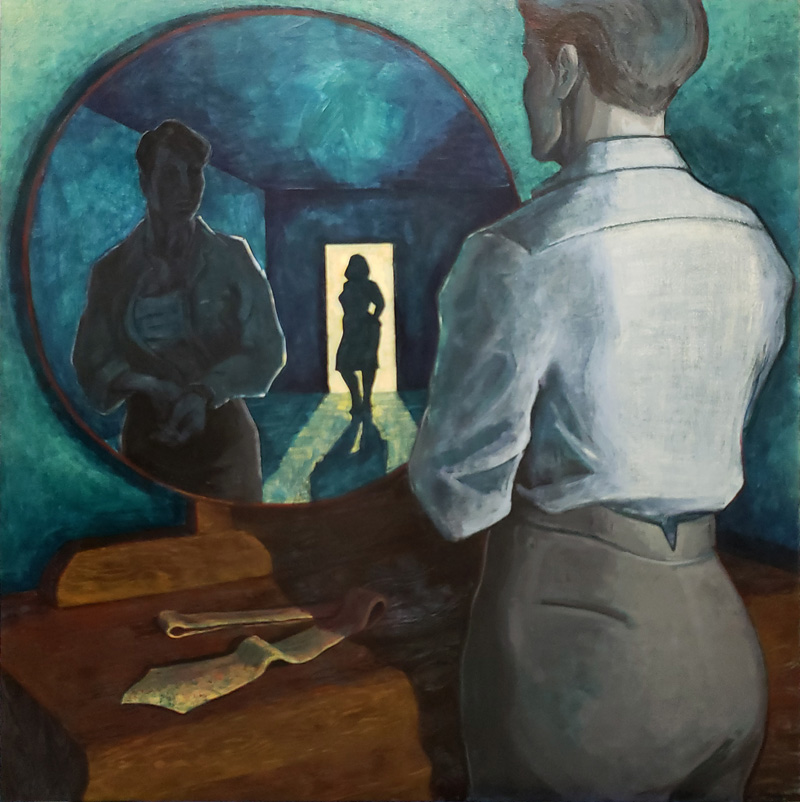
My art also uses doorways, mirrors, and dramatic lighting. No wonder I like it!


Picture
©lesliepetersonsapp Many a Moon 38x38
(A few years ago, I was able to go to The Museu Picasso in Barcelona and see a series of 58 paintings that he did in 1957, all based on Las Meninas. But more about that guy later.)

Goya
There is happy Goya, then sad, crazy Goya.


Goya was a court painter and social climber who produced many canvases of royalty, romanticized country folk, flirtations, dances and idyllic landscapes.

Picture
Goya, Blind Man's Bluff, 1789
Then there is dark Goya, who really stepped out of the common, more commercial art-making of the day to create stark, raw paintings and etchings about some of the vile aspects of humanity.
Picture
Goya, The Third of May 1808, (painted in 1814)


The Third of May 1808 is a stunning painting about Napoleonic forces occupying Spain.
Picture
Goya, Saturn Devouring His Son, 1819-23
Los Caprichos (The Caprices) and The Disasters of War are brutally honest depictions of human cruelty and folly.
Picture
Goya, The Disasters of War, 1810-20
The Black Paintings were painted directly on the walls of his home, and were never intended to be publicly viewed. But there they were, in The Prado.
The most famous of these is Saturn Devouring His Son, based on Greco-Roman mythology.

I have seen reproductions of these paintings all my life, and to see them in person was thrilling.


Picasso
Then, there is The Guernica.

Picasso was born in Malaga, Spain. He lived in Barcelona and France. I have gone to a lot of museums devoted to his work.

I don’t love all Picassos. He was an immensely prolific artist, who lived and worked a helluva long time. He was one of the most famous artists of all time, even during his lifetime, so if he blew his nose on a hanky, some museum somewhere probably has it.

Moreover, he was incredibly versatile and his style ranged widely. So. I don’t love all Picassos. But I love The Guernica. So much that I actually call it The Guernica, for some reason.

Picture
Picasso, Guernica, 1937
It’s about the bombing of a Basque country town by Nazi and Fascist Italy forces in 1937.

It is over 25 feet long.

It is entirely black, white, and variations of warm and cool greys.

The forms fold and unfold upon themselves, and it the best of what cubism can offer. The abstraction supports the emotional power of the moment. Chaos, pathos, terror, grief.

Seeing it in person was like looking at the Grand Canyon for me. I could see the subtly of the “color”, the ghosts of lines and brush marks that had been corrected or shifted. In the room where it hangs are arranged drawings and paintings that are clearly sketches for the final piece.

Also included in this same room was Minotauromachy, a largish etching from 1935. 
Picture
Picasso, Minotauromachy, 1935
I adore Picasso’s classically inspired etchings, and this is one of the best. Because it is an etching, and therefore there are multiples of it, I have seen it before. But I it was great to see it again.
Unfortunately, I didn’t have enough time at the Museo Reina Sophia to see the entire collection. What I did see were paintings, sculpture, posters, books, architectural drawings, and product design from the modern era, (1910’s-1940’s) As I wrote in Why Noir? The Art and Style of the Era, modern art has had a profound influence on my work.  Most of the work was Spanish, so it helped to fill out the cultural and political context The Guernica was created in.
Picture

Picture
Thanks for reading my travelogue from the point of view of my inner artist.

With any luck I will be able to wrap my head around this experience and write some more, specifically the parts of me that are:

The Dance Enthusiast
The History Geek
The Antiquarian/Archeology Nerd

I somehow doubt I will go into The Spoiled Princess aspect of myself, as it is somewhat embarrassing.
0 Comments

Why Noir? It's Fate, Baby.

9/19/2022

1 Comment


A series on how film noir inspires my art- Final Entry!


So, Why Noir?

Being an artist may look like fun, but it is tough.

Putting yourself out there for others to see is perennially disquieting. In order to make it all worth it, the subject and method has to be captivating.
Picture
©lesliepetersonsapp Miss Darger II 24x30
I am compelled to tell a story with my art. No matter if it is based on Shakespeare, mythology, or film noir, I am driven to explore and share the landscape of my imagination.
Picture
©lesliepetersonsapp The Knave of Swords 30x20


Similar to the myths and stories of old, the characters are driven by forces larger than themselves and are so very, very human. Often being brought down by their own drives and weaknesses, they are driven by a futile effort to cheat Fate. The themes are undying elements of what it is to be human.


In the words of the Czar of Noir, Eddie Muller, film noir is "suffering with style".


By utilizing the elastic armature of the elements of film noir, I create art that is charged with longing, adventure, romance, and intrigue. I am able to expand and deepen my skills as a person and an artist, all the while having the time of my life.
Picture
©lesliepetersonsapp Circle Mirror 36x36
For now, I am entirely caught up in the dark labyrinth of film noir.

But who knows what future stories my art will tell?


Need more noir?

Check out The Film Noir Foundation, which restores films noir and shows them at their film festivals.

It's founder, the Czar of Noir, Eddie Muller, is also a host on TCM's Noir Alley, which shows films noir every Saturday night and Sunday mornings.


Why Noir? is a series! Read 'em all.
1 Comment

Why Noir? The Unusual Suspects

9/16/2022

1 Comment


A series on how film noir inspires my art- Entry #9


Why is Shakespeare still so popular after all this time? It's because his stories and characters are timeless. There have been countless versions of his plays where the settings and characters’ identities are changed to bring new interpretations to the story presented.

The characters in noir are as vivid and fundamental as an archetype. They are so solid they can be dressed up in any outer appearance and still resonate, still express the noir sensibility.

Picture
Picture

There are a profusion of examples of crime novels that star characters of many kinds, from the famous private eye Easy Rollins, to tough gay guy/investigator Dave Brandstetter.


The themes are universal and can be ascribed to any individual. So, I can change the outer identities of my characters, and it can still be noir.
Picture
©lesliepetersonsapp Bars 16x20
The scenes in my artwork are presented without irony and are imbued with an immediacy which invites the viewer to experience the scene as a contemporary moment.


They don’t coyly refer to themselves as being "film noir" or use signifiers to make them seem like cultural artifacts.  There is no breaking down of the fourth wall.

It is as if we could walk through the picture frame and become part of the action. If this could be possible, what would we see, and who would be there?

Picture
©lesliepetersonsapp Incognito 10x8
Picture
©lesliepetersonsapp The Hanged Man 32x18


It is easy for me to depict white, cis-gender women. It’s more of a stretch to depict scenes with people outside my personal lived experience.

But the figures in my work and in my imagination sometimes take on a life of their own, and want to be expressed as they are: male, non-white, queer...

To not follow these impulses would, in effect, be negating their existence.

Whether I handle this successfully is a question I continually ask myself.

The adaptability of film noir characters allows me to enlarge the limits of my understanding and expression. 
Picture
©lesliepetersonsapp Keys 40x48

Why Noir? is a series! Read 'em all.
1 Comment

Why Noir? It's Complicated

9/14/2022

2 Comments


A series on how film noir inspires my art- Entry #8


When we are engrossed in a mystery novel, the complicated plot tangles we must unravel keep us entranced.
Picture
©lesliepetersonsapp Pursuit 24x48
The characters in noir are caught in a web of intrigue and moral ambiguity. Their exploits involve daring and danger, plot twists and betrayals. They usually believe they can manipulate a situation to their advantage over another.

The dream I weave in my paintings is a version of myself who is, in a word: clever.

Very unlike who I really am.


In my artwork, the space can be complicated and sometimes difficult to navigate. The claustrophobic, multi-layered space illustrate the sometimes-turgid complexity of our minds and relationships.

The identity of figures is often obscured, sometimes visually competing with shadows that seem more alive than they are.

Picture
©lesliepetersonsapp Search 48x40
Picture
The hall of mirrors scene, The Lady From Shanghai

Mirrors, doorways and windows proliferate, creating dazzling illusions, and act as apertures into other worlds. The dark, chiaroscuro lighting symbolizes obscured meanings and secrets withheld.


Like getting into a good novel or movie, my paintings invite you to take time and decipher what is being presented.
Picture
©lesliepetersonsapp Many a Moon 38x38

Why Noir? is a series! Read 'em all.
2 Comments
<<Previous
Forward>>

    Categories

    All
    ADHD
    Archeology
    Artistic Process
    Artists Books
    Atlas
    Film Noir
    Finished Work
    History
    Inspirations
    Narrative And Subject
    Travelogue
    Why Noir?


    Not seeing what you're looking for? My previous blog on blogspot can be found HERE.

    RSS Feed

Copyright ©2025 lesliepetersonsapp
  • Home
  • Portfolio
    • Artist Books 2023-2025
    • Archeology Art 2022-2023
    • Film Noir 2015-2022
    • Myth and Story 2016-2017
    • Vintage Snapshot 2008-2014
  • About
  • Contact
    • Contact
    • subscribe
  • Blog